
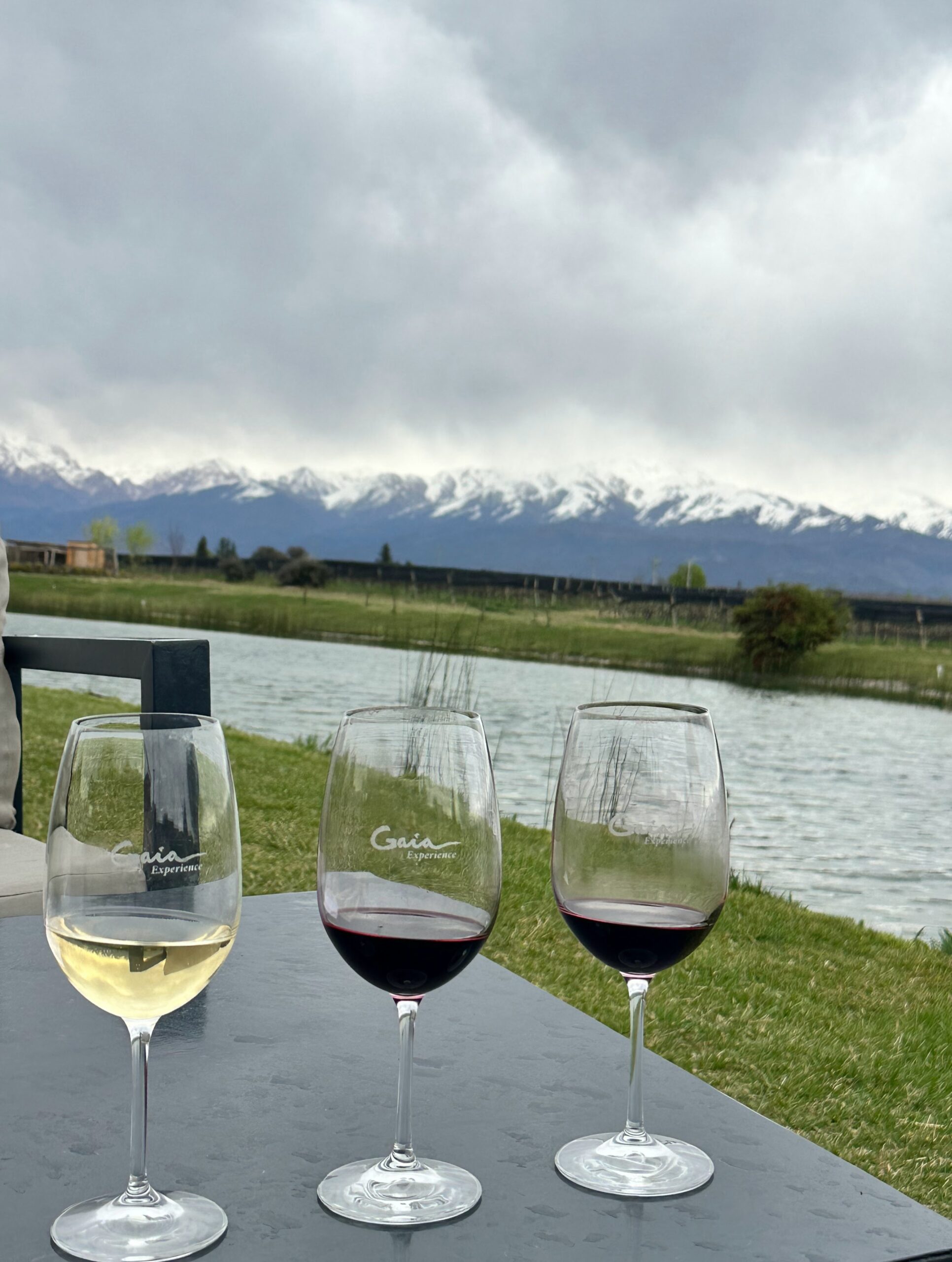
What Makes Uco Valley Malbec Different?
The Uco Valley sits between 900 and 1,500 meters above sea level. The difference between daytime and nighttime temperatures can exceed 20°C. During the day, intense Andean sunlight promotes phenolic ripeness. At night, cold air descends from the mountains, dramatically slowing the ripening process and preserving natural acidity and aromatic compounds. The result is Malbec with deeper color, firmer tannins, higher acidity, and aromatic complexity that moves from classic plum and violet notes toward darker fruits, graphite, floral perfume, and extraordinary minerality.
The Key Sub-Zones
Tupungato in the northern Uco Valley is the highest and coolest zone, producing the most elegant and age-worthy Malbecs. Tunuyán in the center offers a slightly warmer climate with exceptional fruit concentration. San Carlos in the south is newer to premium wine production, particularly around the Paraje Altamira area — this zone of ancient alluvial soils at around 1,100 meters has produced some of Argentina’s most talked-about wines in recent years.
Producers to Know
Zuccardi Valle de Uco is the ambassador to the world, with single-parcel Malbecs from Altamira, Gualtallary, and other sites as benchmarks. Cheval des Andes, a joint venture between Château Cheval Blanc and Terrazas de los Andes, produces one of Argentina’s most sophisticated red blends. Clos de los Siete offers excellent value for the quality. Among boutiques, look for Gimenez Riili and Durigutti Family Winemakers.
How to Taste Uco Valley Malbec
The best way to understand the difference is to taste Uco Valley and Luján de Cuyo Malbec side by side. Many wineries offer comparative tastings that let you experience the impact of terroir firsthand. Our Uco Valley wine tours are built around exactly this kind of educational tasting experience.